memisc 0.99 published on CRAN
A new version 0.99 of package memisc has been published on CRAN, which adds a few new features to the previously published version.
One highlight of the new release is the support for output into HTML.
Since contemporary word processors can read HTML, it is now much easier
to get nicely formatted mtable output in "Word" or "LibreOffice".
Another highlight is the ability to create complex tables by putting
together other tables.
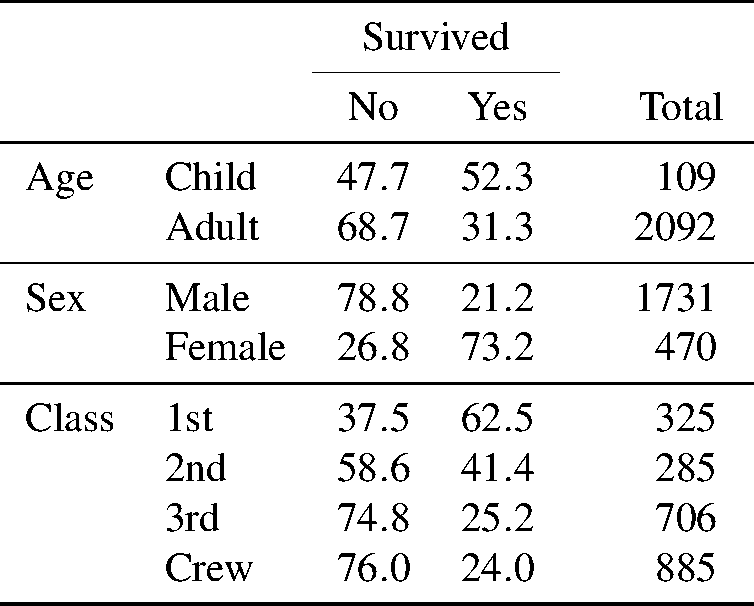
Changes since 0.97
New features
-
Support for exporting results of various functions into HTML format is now supported by the function
format_html. This should make it easier to import them into HTML or word-processing documents (that support importing HTML). A preview of the HTML is made available by the new (generic) functionshow_html.In particular, results of the functions
mtable(i.e. tables of model estimates),ftable(i.e. flattened contingency tables etc.), andcodebooks, can be exported int. HTML usingformat_html. Also data frames can be exported into HTML. -
A function
dsViewis added, which allows a display ofdata.setobjects similar asViewdisplays data frames. -
mtablenow handles multi-equation models better, in particular if the model objects supplied as arguments vary in the number and/or names of the equations. There is also a new option to place confidence intervals to the right of coefficient estimates. Furthermtablegains the following optional aguments:show.baselevel, which allows to suppress the display of baseline categories of dummy variables, when dummy variable coefficients are displayedsdigits, to specify the number of digits of summary statistics.gs.options, to pass optional arguments togetSummary, allowin for more flexibility in creating tables.
One can now use a
summaryTemplategeneric function for formatting model summaries, in addition to set the template bysetSummaryTemplate. Finally, parts of "mtables" can be extracted using the[operator as with matrices, and "mtables" can now also be concatenated. -
There is now an object class for survey items containing dates, called
"datetime.item" -
There is a new function
wild.codesto check wild codes (i.e. unlabelled codes of an otherwise labelled item.) -
codebooknow supports data frames, factors, and numeric vectors. -
A
toLatexmethod exists now fordata.setobjects. -
A new
percentagesfunction is added to allow easy creation of tables of percentages. -
Support for with model groups in
mtable.c.mtablenow creates groups of models, if arguments are tagged. -
Flattened contingency tables (
ftables as they are created by the eponymous function in thestatspackage) can now be combined intoftable_matrixobjects. This can be done by usingrbind()orcbind().
Bugfixes
spss.fixed.fileis now able to handle labelled strings andvalue labelsandmissing valuesstatements.- Internal C-code used by
spss.fixed.fileno longer assumed that arguments are copied -- some strange behaviour of objects created byspss.fixed.fileis now corrected. - Description of items in external data sources is more complete now
-the same information as for items in internal
data.sets. applyTemplatenow returns empty strings for undefined quantities.collectmethod fordata.setsnow works as expected.spss.fixed.filenow checks whether there are undefined variables invarlab.fileetc.Stata.filenow can import Stata 9 and Stata 10 files.strandls.strare imported from theutilspackage to prevent a NOTE in R CMD check
User-visible changes
- Argument
dropis no longer used by functionmtable. - All vignettes now use knitr.
- Format of file produced by
write.mtablecan now be specified using aformat=argument. ButforLaTeX=TRUEstill can be used to get LaTeX files.
Defunct
- The functions
Termplot,Simulate, andpanel.errbarsare defunct. Graphics similar to those built withpanel.errbarscan be created with facilities provided by the package "mplot", which is currently available on GitHub. - The function
UnZiphas been removed from the package.unzipin conjunction withsystem.filedoes the same job, as can be seen in the example forspss.portable.file.